Quickpost News | Dhaka | December 19, 2025
They came at night—angry, organized and armed with fire.
What began as a protest over the death of student leader Sharif Osman Hadi quickly turned into a chilling assault on Bangladesh’s free press. Within hours, the offices of two of the country’s leading newspapers—Prothom Alo and The Daily Star—were under siege.
Both buildings were vandalized and set ablaze in a coordinated mob attack that has sent shockwaves across the nation.
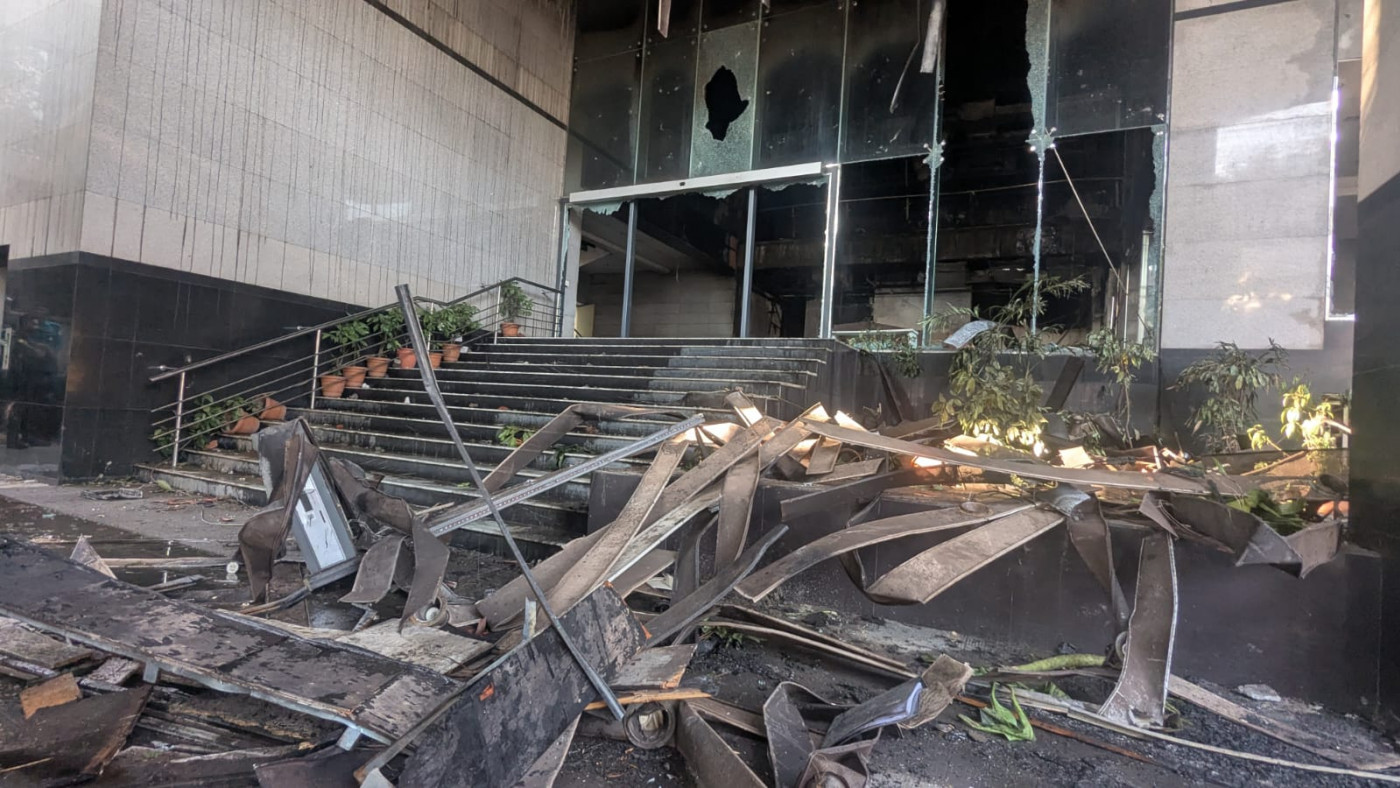
News footage and eyewitness accounts show that mobs marched through Karwan Bazar late Thursday night, forcefully entering the premises of both newspapers, smashing windows, destroying property and starting fires inside the buildings. Fire services and security forces were later deployed to bring the situation under control and rescue trapped journalists from the smoke‑filled offices.
Sequence of Events
• After the announcement of Hadi’s death, protesters moved from Shahbagh to Karwan Bazar, chanting slogans and demonstrating against perceived political grievances.
• At the headquarters of Prothom Alo, attackers vandalised furniture and documents and set fire to parts of the newsroom.
• The mob then targeted the nearby office of The Daily Star, breaching its entrance and setting fire to ground floor areas, forcing journalists to seek refuge on the roof until rescued by fire crews and the army.
• International press freedom organisation Committee to Protect Journalists (CPJ) has expressed alarm over the attacks, noting that protesters trapped journalists inside before they were evacuated.
How It Unfolded
According to eyewitnesses, the mob—chanting anti-government slogans—moved from Shahbagh towards Karwan Bazar just after 10 p.m. on Thursday. Within minutes, they stormed into the Prothom Alo building, smashing glass doors and office equipment before setting fire to the newsroom.
Then they turned to their next target: the headquarters of The Daily Star, just blocks away. Journalists inside ran for safety, some barricading themselves in rooms, others climbing to the roof. Flames and smoke filled the lower floors as the attackers torched sections of the ground level.
When firefighters and the army arrived, it took over two hours to bring the situation under control. Several reporters were rescued from the rooftop, dazed and coughing from smoke inhalation.
🔗 Reuters: Protesters set fire to newspapers after Hadi’s death🔗 Straits Times: Bangladeshi media under attack
Trapped Voices
Staff members from both publications described the horror:
“We thought they were just protesters. Then they started smashing everything. We hid under our desks,” said a Prothom Alo sub-editor.
“They were hunting for anyone with a press badge,” said a Daily Star journalist. “I had to text my wife goodbye. I thought we were going to die.”
The Committee to Protect Journalists (CPJ) and Reporters Without Borders condemned the attack, calling it “an attack on Bangladesh’s democratic voice.” 🔗 Bangla Tribune: Journalists speak out after Karwan Bazar attacks
A Deeper Message?
Many believe this wasn’t random.
“This was a message. A warning. Silence your voices, or else,” said media analyst Rifat Kamal.
The timing is no accident—just weeks before the national election, with Sharif Hadi’s death igniting political chaos, the attack on Prothom Alo and The Daily Star is being seen as a direct strike against independent journalism.
Government Silent, Journalists Furious
So far, the interim government led by Muhammad Yunus has not issued a formal statement condemning the attacks. Civil society, journalists and political observers are demanding immediate action.
“If they can burn the press, they can silence anyone,” said senior journalist Rubina Rahman.