
Dhaka | The Quickpost
Dhaka stood still on Wednesday.
The city spoke softly, through silence and prayer.
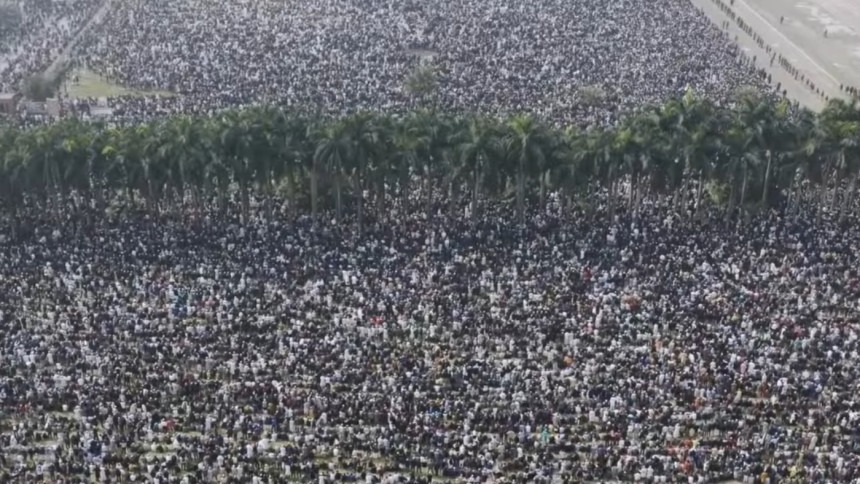
From early morning, Manik Mia Avenue and its surrounding areas turned into a vast sea of people as thousands gathered to pay their final respects to former prime minister Khaleda Zia. Roads leading to the National Parliament Complex filled quickly, with mourners arriving from different parts of the capital and beyond.
By sunrise, crowds had already begun assembling. As the hours passed, Farmgate, Karwan Bazar, Tejgaon and Agargaon saw growing congestion, with movement coming nearly to a halt in several areas. People arrived by bus, truck, private cars, motorcycles, and on foot—driven by a shared sense of loss.
This was not an ordinary funeral.
It was one of the largest public gatherings Dhaka has witnessed in recent years.
Tight Security, Calm Atmosphere
Law enforcement agencies deployed multiple layers of security around the venue. Entry restrictions were enforced, including bans on bags and heavy items. Despite the enormous turnout, the crowd remained largely disciplined.
Continuous recitation from the Holy Quran played over loudspeakers, creating an atmosphere of solemn reflection. Many stood quietly for hours, waiting for the janaza to begin.
Janaza at Parliament Complex
At 3:02 pm, the namaz-e-janaza was held at the South Plaza of the Jatiya Sangsad Bhaban. As prayers concluded, thousands raised their hands together, whispering final supplications. Tears were visible across the crowd.
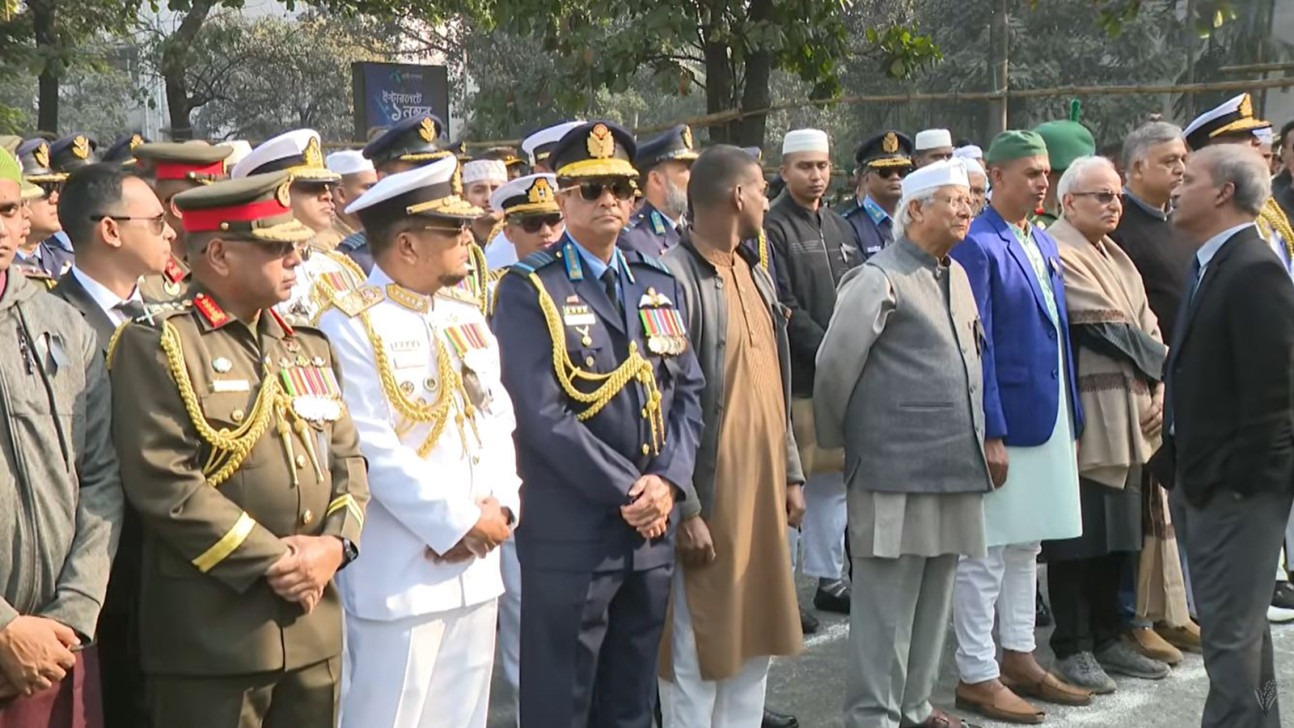
Senior state officials, political leaders, diplomats, and representatives from several South Asian countries attended the janaza, underlining the national and regional significance of the moment.
For many present, this was more than a farewell to a political leader.
It marked the end of an era.
Burial with State Honours
Following the janaza, Khaleda Zia was taken to Zia Udyan, where she was laid to rest beside her husband, martyred president Ziaur Rahman. The burial was conducted with full state honours, including a guard of honour. The national flag remained at half-mast.
Public access to the burial site was restricted due to space and security concerns, but mourners gathered nearby to offer prayers from a distance.
A Nation in Mourning
The government declared three days of state mourning. Banks, financial institutions, and stock exchanges remained closed. Many educational institutions suspended activities. Special prayers were offered in mosques across the country, with similar observances held at other religious institutions.
Across Dhaka and beyond, conversations were muted. Political debate faded, replaced by reflection.
People spoke of her long political journey—marked by power, imprisonment, resilience, and controversy. Supporters and critics alike acknowledged her place in Bangladesh’s history.
On this day, differences were set aside.
Dhaka bore witness to a rare moment of unity—
a collective farewell shaped not by slogans, but by silence.