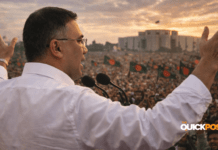

As Bangladesh prepares for its first national election since the fall of former prime minister Sheikh Hasina, senior figures of the Awami League, now living in exile in India, say they are planning a political return—despite being barred from the polls and facing serious criminal charges at home.
According to party insiders based in Kolkata and New Delhi, more than 600 Awami League leaders and activists fled Bangladesh after mass protests in mid-2024 forced Hasina to leave the country. Many now face allegations ranging from corruption and embezzlement to murder and crimes against humanity linked to the final months of her rule.
Party Banned, Leadership Investigated
In May 2025, Bangladesh’s interim government suspended the Awami League and banned it from political activity while investigations against senior leaders proceed. The party has also been prohibited from contesting or campaigning in the 12 February 2026 election, which the interim administration—led by Nobel laureate Dr Muhammad Yunus—has promised will be the country’s first free and fair vote in over a decade.
Later in 2025, a war crimes tribunal sentenced Hasina to death in absentia for crimes against humanity. She has rejected the verdict as politically motivated and remains in India, which has so far ignored Bangladesh’s extradition requests.
Hasina Still Active from India
Awami League officials say Hasina remains deeply involved in party strategy, holding long daily calls with loyalists inside Bangladesh and directing plans to undermine the upcoming election. From a secure location in India, she has urged supporters to boycott the polls and warned that the vote will lack legitimacy without her party’s participation.
Party leaders argue that excluding the Awami League undermines democratic credibility. They accuse the interim government of political retaliation, a claim Yunus has denied.
India’s Role Raises Tensions
India’s decision to allow Awami League leaders to operate from its territory has strained India–Bangladesh relations. Dhaka has publicly criticised New Delhi for providing a safe haven to figures it considers fugitives. Tensions escalated after Hasina addressed supporters at a gathering in Delhi, condemning the election and accusing the interim government of seizing power unlawfully.
Bangladesh’s foreign ministry called the event a “clear affront” to the country’s people and sovereignty. The Indian government has not publicly responded.
Allegations, Denials and Internal Doubts
Human rights groups and UN reports have documented widespread abuses during Hasina’s 15-year rule, including enforced disappearances, torture, suppression of the media and heavily disputed elections. While many Awami League leaders deny the allegations outright, a small number have acknowledged past “mistakes,” including authoritarian practices and flawed elections.
Despite internal divisions, exiled leaders remain confident that political instability or a contested election outcome could create conditions for their return.
“We know things look dark now,” said one former MP living in Kolkata. “But we don’t believe this situation will last.”
What Comes Next
Analysts say the Awami League’s strategy hinges on disrupting the credibility of the election and leveraging regional geopolitics. Whether that approach succeeds—or further isolates the party—will shape Bangladesh’s political future long after the ballots are cast.
Sources
https://www.theguardian.com/world/2026/feb/03/exiled-awami-league-members-political-comeback-india